WHERE TO BUY GHK-CU USA
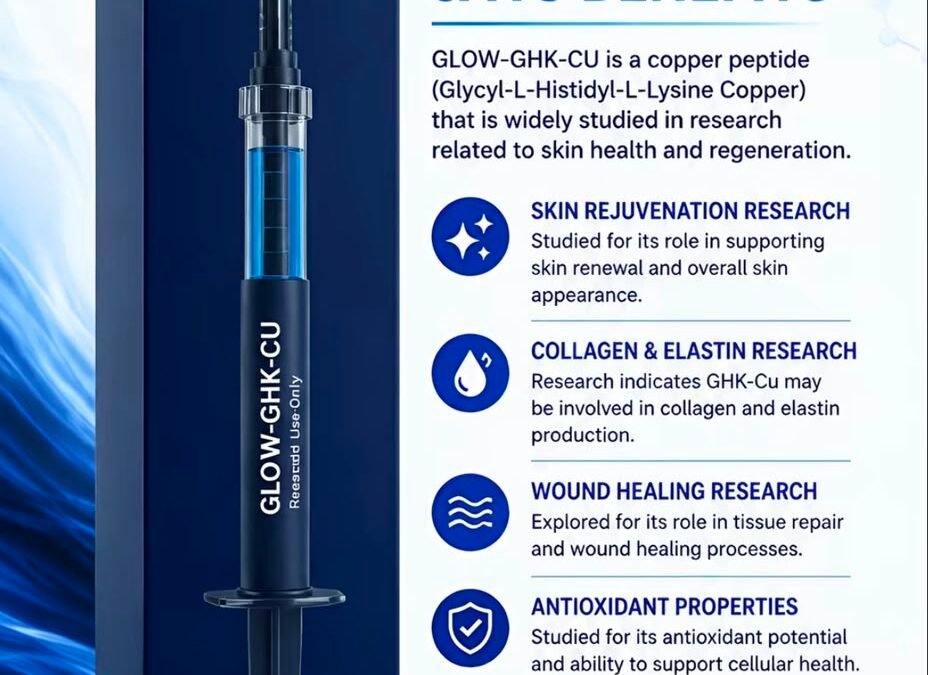
GHK-Cu stands for Glycyl-L-Histidyl-L-Lysine Copper (II). It is a naturally occurring copper-binding peptide complex consisting of the three-amino-acid peptide GHK (glycine-histidine-lysine) bound to Cu²⁺ (copper).WHERE TO BUY GHK-CU USA
GHK occurs naturally in the human body, including in blood and other tissues, and its concentration appears to decline with age. GHK-Cu has attracted significant interest in skin care, tissue repair, wound healing, and regenerative research because of its effects on extracellular-matrix remodeling and cellular signaling.
1. How GHK-Cu works.WHERE TO BUY GHK-CU USA
GHK has a strong affinity for copper. When it binds copper, the resulting GHK-Cu complex can interact with biological systems involved in tissue repair.
Research suggests GHK-Cu can influence:
- Fibroblast activity
- Collagen production
- Extracellular-matrix remodeling
- Glycosaminoglycan production
- Inflammatory signaling
- Cell migration
- Angiogenesis-related processes
- Skin regeneration
Laboratory studies have demonstrated increased production of extracellular-matrix components and modulation of matrix metalloproteinases and their inhibitors.
GHK-Cu and collagen.WHERE TO BUY GHK-CU USA
One of the major reasons GHK-Cu is used in cosmetic and regenerative research is its relationship with collagen and connective tissue.
Collagen provides structural support to skin. With aging, collagen production and organization change, contributing to loss of firmness and formation of wrinkles.
Research indicates GHK-Cu can stimulate processes associated with collagen and extracellular-matrix synthesis. Studies have also reported effects on glycosaminoglycans and proteoglycans, which are important components of the skin’s extracellular matrix.
However, this does not mean that applying or injecting GHK-Cu will automatically produce a major increase in collagen in humans. Much of the mechanistic evidence comes from laboratory and animal research.